
Job Interview Questions and Answers for BPO Applicants
Preparing for a BPO interview can be challenging, especially when you don't know what questions a recruiter may ask. Knowing common job interview questions and practicing how to answer them can help you communicate more clearly, feel more confident, and make a stronger impression.
Whether you're a first-time applicant, career shifter, or experienced BPO professional, interview preparation can help you explain your skills, experience, and career goals more effectively.
In this guide, you'll learn:
- Common job interview questions and sample answers
- BPO and call center interview questions
- How to answer situational questions using the STAR method
- How freshers can answer interview questions without BPO experience
- Questions experienced BPO applicants should prepare for
- Common interview mistakes to avoid
- How to prepare before your Metacom interview
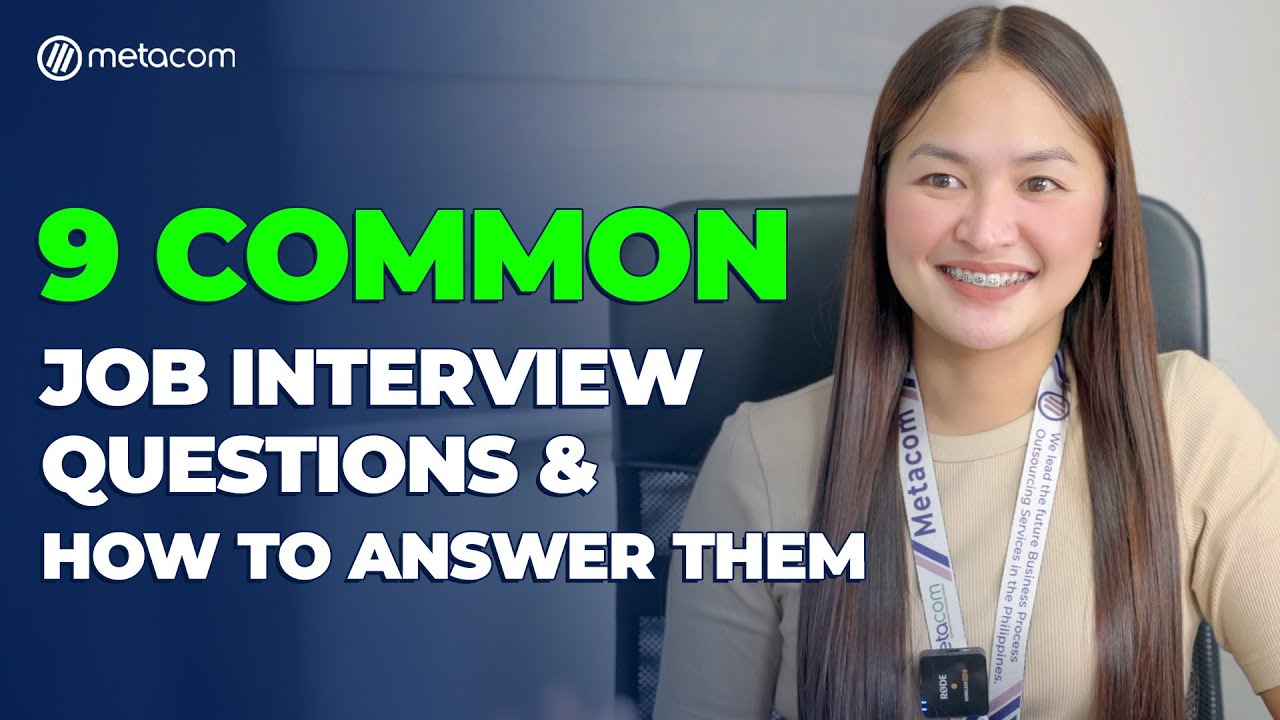
Watch: Metacom Job Interview Questions Guide
Before going through the common questions below, watch our interview guide for practical tips on how to prepare for your BPO interview.
Metacom Leaked Files: Job Interview Questions (How to Answer Them)
The video provides applicants with additional guidance on what they may encounter during the recruitment process and how they can approach their answers.
Why Should You Prepare for Job Interview Questions?
A job interview isn't only about giving the "right" answer.
Recruiters also evaluate how you communicate, explain your experience, listen to questions, and respond to different situations.
Preparing for job interview questions can help you:
- Organize your thoughts
- Explain your experience clearly
- Reduce interview anxiety
- Prepare relevant examples
- Improve your confidence
- Give more complete answers
- Avoid unnecessary or unrelated responses
For BPO positions, communication is especially important because many roles involve interacting with customers, clients, and internal teams.
The goal isn't to memorize every possible answer. Instead, understand the question and prepare key points based on your actual experience.
Common Job Interview Questions and Sample Answers
While every interview is different, there are several questions that applicants should practice before their interview.
Here are some of the most common job interview questions you may encounter.
1. Tell Me About Yourself
"Tell me about yourself" is one of the most common interview questions.
Your answer should be short, professional, and related to the position you're applying for.
A simple structure is:
Present → Experience → Skills → Career Goal
Sample answer:
"I'm a college graduate with experience in customer service. In my previous role, I developed my communication and problem-solving skills while assisting customers. I'm now looking for an opportunity where I can further develop these skills and build a long-term career in the BPO industry."
Don't tell your entire life story.
Focus on information that helps the recruiter understand your background and why you're interested in the position.
2. Why Do You Want to Work in the BPO Industry?
Recruiters may ask why you're interested in working in the BPO industry.
Avoid making salary your only reason.
Instead, discuss things such as:
- Career growth
- Professional development
- Communication skills
- Customer service
- Learning opportunities
- Working in a fast-paced environment
- Long-term career goals
Sample answer:
"I'm interested in the BPO industry because I want to develop my communication and customer service skills while building a long-term career. I also enjoy working in a fast-paced environment where I can continuously learn."
Your answer should demonstrate that you understand the industry and have realistic career expectations.
3. Why Do You Want to Work at Metacom?
If you're applying to Metacom, you should be prepared to explain why you're interested in the company.
Your answer should be connected to your actual career goals rather than sounding like a copied company description.
You can discuss:
- The position you're applying for
- Career development
- Your interest in the BPO industry
- Your relevant skills
- Opportunities to learn
- Your long-term career goals
Sample answer:
"I'm interested in joining Metacom because I'm looking for an opportunity where I can use my communication and customer service skills while continuing to grow professionally. The position also matches the type of work and career direction I'm looking for."
Make your answer personal.
A recruiter will usually be able to tell when an answer has simply been memorized.
4. Why Should We Hire You?
This is one of the most important job interview questions because it gives you an opportunity to explain what you can bring to the company.
Think about three areas:
Experience
What relevant experience do you have?
Skills
What are you good at?
Contribution
How can your skills help you succeed in the position?
Sample answer:
"You should hire me because I'm adaptable, willing to learn, and comfortable communicating with different types of people. I also have experience handling customer concerns and solving problems, which I believe can help me perform well in this position."
Avoid simply saying:
"I'm hardworking and motivated."
Explain why your skills make you a good candidate.
5. What Are Your Strengths?
When answering questions about your strengths, choose skills that are relevant to the position.
Some examples include:
- Communication
- Patience
- Problem-solving
- Adaptability
- Time management
- Active listening
- Customer service
- Attention to detail
Instead of saying:
"My strength is communication."
Explain how you have demonstrated that strength.
Sample answer:
"One of my strengths is communication. In my previous role, I regularly interacted with customers, so I learned how to explain information clearly and adjust my communication depending on the customer's concern."
Specific examples make your answer more credible.
6. What Is Your Weakness?
This can be one of the more difficult job interview questions to answer.
Choose a genuine but manageable area for improvement.
Then explain what you're doing to improve.
Sample answer:
"I used to feel nervous when speaking in front of unfamiliar people. I've been working on this by practicing my communication skills and putting myself in situations where I need to speak more confidently."
This demonstrates:
- Self-awareness
- Honesty
- Willingness to improve
Avoid saying that you have no weaknesses.
Instead, show that you recognize areas where you can continue developing.
Call Center Interview Questions You Should Practice
If you're applying for a call center or customer service position, you may also encounter questions focused specifically on customer interactions.
Here are several call center interview questions worth practicing:
How would you handle an angry customer?
Focus on:
- Listening to the customer
- Understanding the concern
- Showing empathy
- Verifying the issue
- Providing the appropriate solution
- Following the correct process
What does good customer service mean to you?
A strong answer should discuss understanding the customer's needs, communicating clearly, and providing an appropriate solution while following company policies.
How do you handle pressure?
Give a real example if you have one.
Explain how you prioritize tasks, stay organized, and remain focused when dealing with multiple responsibilities.
What would you do if you didn't know the answer to a customer's question?
Don't pretend to know something you don't.
Explain that you would verify the information using the appropriate resources or escalate the concern when necessary.
How to Answer Situational Job Interview Questions
Situational questions help recruiters understand how you respond to workplace challenges.
One of the most useful approaches is the STAR method.
S — Situation
Explain what happened.
T — Task
Describe what you needed to accomplish.
A — Action
Explain what you personally did.
R — Result
Describe the outcome.
Example question:
"Tell me about a time you handled a difficult customer."
Instead of saying:
"I stayed calm and helped the customer."
Give a structured answer:
"In my previous job, I handled a customer who was upset about a delayed request. I listened to the customer's concern, confirmed the issue, and explained the available options. I then coordinated with the appropriate team to resolve the concern. The customer accepted the solution and the issue was resolved."
The STAR method helps recruiters understand what happened, what you did, and what happened afterward.
10 BPO Interview Questions You Should Practice
Before your interview, practice answering these questions aloud:
- Tell me about yourself.
- Why do you want to work in the BPO industry?
- Why do you want to work at Metacom?
- Why should we hire you?
- What are your strengths?
- What is your weakness?
- How would you handle an angry customer?
- Tell me about a time you solved a difficult problem.
- Why did you leave your previous company?
- Where do you see yourself in five years?
Don't memorize complete answers.
Instead, prepare a few key points for each question so you can respond naturally.
How Should You Answer Questions About an Angry Customer?
This is a common question for customer service and BPO applicants.
Recruiters want to understand how you handle conflict and customer concerns.
A strong answer should demonstrate:
- Patience
- Active listening
- Empathy
- Problem-solving
- Professional communication
- Following company procedures
Sample answer:
"I would first listen carefully to understand the customer's concern without interrupting. I would acknowledge the customer's frustration, clarify the issue, and explain the available solution. If the concern required assistance from another team, I would follow the proper escalation process."
The important thing is to show that you can remain professional even during difficult interactions.
What If You Don't Have BPO Experience?
Not having BPO experience doesn't automatically mean you don't have relevant skills.
Depending on the position's requirements, you may be able to highlight transferable experience from:
- Retail
- Hospitality
- Sales
- Internships
- School organizations
- Volunteer work
- Freelancing
- Customer-facing positions
For example, retail experience can demonstrate:
- Customer service
- Communication
- Problem-solving
- Complaint handling
- Patience
- Product knowledge
Sample answer for a fresher:
"Although I don't have BPO experience yet, I developed communication and teamwork skills through school and other experiences. I'm willing to learn, open to feedback, and confident that I can apply these skills to a customer service role."
Always review the specific qualifications of the job you're applying for because requirements can vary between openings.
Job Interview Questions for Freshers
If you're applying for your first BPO job, you may be worried because you don't have previous call center experience.
Don't assume that you have nothing to discuss.
Think about experiences from:
- School projects
- Internships
- Part-time work
- Student organizations
- Volunteer activities
- Customer-facing experiences
For example, participating in a school organization may have helped you develop:
- Teamwork
- Communication
- Leadership
- Time management
- Problem-solving
Use those experiences to demonstrate your potential.
Questions freshers should practice:
Why should we hire you even without BPO experience?
Why do you want to work in a call center?
How would you handle an angry customer?
What are your strengths and weaknesses?
How do you handle pressure?
What are your career goals?
Your lack of BPO experience doesn't have to be the focus of your entire interview. Focus on the skills and experiences you can bring to the role.
Job Interview Questions for Experienced BPO Applicants
Experienced applicants should be prepared to discuss their previous BPO roles in greater detail.
Recruiters may ask about:
- Previous accounts
- Job responsibilities
- Performance
- Customer interactions
- Difficult situations
- Attendance
- Career progression
- Reason for leaving
- Tools and systems used
- Customer service experience
- Achievements
Don't simply list your previous job titles.
Explain what you actually did.
For example:
Instead of:
"I worked as a customer service representative for two years."
You could say:
"I worked as a customer service representative for two years, where I handled customer inquiries, account concerns, and service-related issues. I also worked with different internal teams to resolve concerns and maintain a positive customer experience."
This gives the recruiter a better understanding of your actual experience.
How to Answer "Why Did You Leave Your Previous Job?"
This question can feel uncomfortable, especially if your previous employment ended because of a difficult situation.
Keep your response:
Honest + Relevant + Professional
Avoid criticizing your previous:
- Employer
- Manager
- Team
- Coworkers
Instead, focus on your career goals.
Sample answer:
"I decided to look for a new opportunity because I wanted to continue developing my skills and find a position that offers opportunities for career growth."
You don't need to provide unnecessary details.
Keep your answer professional and focused on what you're looking for next.
What Do Recruiters Look for During an Interview?
Your answers aren't the only things recruiters evaluate.
During the interview, recruiters may also observe how you communicate and interact.
Communication
Can you explain your thoughts clearly?
Confidence
Can you answer without relying too heavily on a script?
Listening
Do you understand the question before answering?
Professionalism
Do you communicate respectfully?
Adaptability
Can you handle unexpected follow-up questions?
Relevant Experience
Can you connect your background to the position?
A strong interview combines good answers with professional communication.
Don't Memorize Your Job Interview Answers
One common mistake applicants make is memorizing an entire interview script.
This can become a problem when the recruiter asks a follow-up question that isn't part of your script.
Instead, prepare key points.
For "Tell Me About Yourself"
Prepare:
- Educational background
- Previous experience
- Relevant skills
- Career goals
For "Why Should We Hire You?"
Prepare:
- Relevant experience
- Strongest skills
- Achievements
- What you can contribute
For "Why BPO?"
Prepare:
- Career growth
- Customer service
- Skills development
- Long-term goals
This approach allows you to answer different job interview questions naturally instead of sounding like you're reciting a memorized response.
What If You Don't Know the Answer?
Don't panic if you encounter an unexpected question.
Take a moment to think before responding.
If you don't have direct experience with something, be honest.
You can say:
"I haven't encountered that situation before, but based on my experience, I would first understand the concern, gather the necessary information, and determine the appropriate solution."
It's better to demonstrate your reasoning than to invent an experience.
Honesty is important during an interview.
How to Handle Salary Questions
Some applicants become nervous when recruiters ask about their salary expectations.
Before the interview, research the position and understand the salary range being offered.
If the recruiter asks for your expected salary, consider:
- Your previous experience
- Your skills
- The position
- The account or industry
- The advertised salary range
- Your overall career goals
Sample answer:
"I'm open to discussing the compensation based on the responsibilities of the position and the company's offer. I'm also interested in understanding the overall package and growth opportunities."
If the job posting already provides a salary range, make sure your expectations are realistic and aligned with the position.
What Should You Do If You Make a Mistake?
Interview nerves are normal.
If you make a mistake while answering:
- Pause.
- Correct yourself if necessary.
- Continue your answer.
- Don't repeatedly apologize.
- Focus on communicating your point clearly.
Recruiters understand that applicants can become nervous.
Making one mistake doesn't automatically mean you've failed the interview.
Interview Preparation Checklist
Before your Metacom interview, use this checklist.
1. Review the Job Description
Understand the:
- Position
- Responsibilities
- Qualifications
- Schedule
- Location
- Work setup
2. Review Your Resume
Be ready to explain everything listed on your resume.
Don't include experience or skills you can't confidently discuss.
3. Practice Your Introduction
Prepare a concise answer to:
"Tell me about yourself."
4. Practice Common Questions
Practice different job interview questions aloud rather than simply reading sample answers.
5. Prepare Real Examples
Think of situations involving:
- Teamwork
- Customer service
- Problem-solving
- Conflict
- Leadership
- Difficult situations
6. Practice Your Communication
Focus on speaking:
- Clearly
- Naturally
- Professionally
- At a comfortable pace
7. Prepare Questions for the Recruiter
You can ask about:
- The position
- Training
- Work setup
- Schedule
- Recruitment process
- Next steps
8. Check Your Interview Setup
For virtual interviews, check your:
- Internet connection
- Camera
- Microphone
- Background
- Lighting
- Device battery
Frequently Asked Questions About Job Interview Questions
What are the most common job interview questions?
Common questions include "Tell me about yourself," "Why should we hire you?", "What are your strengths and weaknesses?", "Why do you want to work in the BPO industry?", and questions about your previous experience.
How should I answer job interview questions?
Answer clearly, honestly, and directly. Whenever possible, provide specific examples from your actual experience instead of giving generic answers.
Should I memorize my interview answers?
No. Prepare key points instead of memorizing complete sentences. This makes your responses more natural and helps you handle follow-up questions.
What if I don't have BPO experience?
Check the requirements of the specific position. If the role accepts applicants without BPO experience, highlight transferable skills from school, retail, hospitality, sales, internships, or other customer-facing experiences.
What are common call center interview questions?
Common questions include "How would you handle an angry customer?", "What does good customer service mean to you?", "How do you handle pressure?", and "What would you do if you didn't know the answer to a customer's question?"
How can I become more confident during an interview?
Practice answering common job interview questions aloud, review your resume, research the position, and prepare real examples from your experience.
What should I do if I make a mistake during an interview?
Don't panic. Take a breath, correct yourself if necessary, and continue your answer. Interviewers understand that applicants can become nervous.
Final Tips for Answering Job Interview Questions
The goal of preparing for job interview questions isn't to create a perfect script.
It's to understand what recruiters may ask and become comfortable explaining your own experience.
Remember these five tips:
1. Be Honest
Don't exaggerate your experience or qualifications.
2. Be Clear
Answer the question directly.
3. Be Specific
Use real examples whenever possible.
4. Be Professional
Maintain a respectful and positive attitude throughout the interview.
5. Be Yourself
Your answers will sound more natural when they reflect your actual experience.
Ready to Start Your Metacom Career?
Preparing for the interview is only the first step.
Once you're ready, explore available opportunities and find a position that matches your skills, experience, and career goals.
Check the latest Metacom job openings and review the qualifications, location, schedule, and work setup before applying.
Explore Metacom Career Opportunities
You can also explore more career guides and interview resources through the Metacom Careers Blog.
Your Next Career Move Starts Here
Don't wait until the interview to start preparing.
Review the job interview questions, practice your answers, prepare real examples, and make sure you understand the position you're applying for.
Prepare. Apply. Interview with confidence.
Your next career opportunity could start with one interview.
Start your Metacom career today.